Address Validation API: How to Choose and What to Test
Short answer
An address validation API takes an address, matches it against postal or commercial reference data and returns a standardized version with a verdict: how precisely it matched, which parts were corrected or inferred, and whether the address looks deliverable. Choose by coverage of your countries, unit-level accuracy, price at your volume and data handling terms.

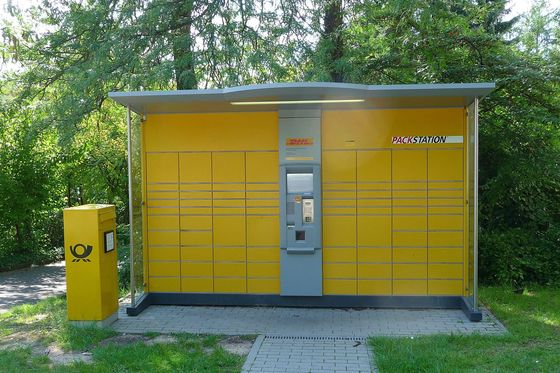
Postal services spent decades building machines that read addresses. The photo above shows a laboratory prototype developed for the US Post Office to sort letter mail automatically. An address validation API is the modern version of the same idea, except it reads your customer’s address before the parcel exists. It answers one question: will a carrier be able to deliver this?
How well it answers depends on the data behind it, and that is where providers differ.
What a validation API actually returns
The response is richer than “valid” or “invalid”. Taking Google’s Address Validation API as a documented example, the response guide describes a verdict with these parts:
| Field | What it tells you |
|---|---|
inputGranularity | How detailed your input was |
validationGranularity | The most specific level that could be validated; PREMISE or SUB_PREMISE usually means likely deliverable |
geocodeGranularity | How precise the coordinates are |
addressComplete | True when nothing is missing, unresolved or unexpected |
hasUnconfirmedComponents | Some parts could not be confirmed |
hasInferredComponents | Some parts were added by the API |
possibleNextAction | A summary hint, for example ACCEPT |
For US addresses the response can also carry USPS data, including a delivery point validation code: Y confirmed, D unit missing, S unit given but not confirmed, N not confirmed. Google notes that this USPS block is not guaranteed to be fully populated for every address, and advises against building logic around specific per-component confirmation levels. Sensible advice for any provider: base decisions on the overall verdict, not on one field.
Three kinds of providers
Most offers fall into one of three groups. The names change; the trade-offs do not.
| Criterion | Global map platform | Postal data reseller | National postal operator product |
|---|---|---|---|
| Typical data source | Own map and address data plus postal data | Licensed postal files such as PAF or USPS data | The operator's own reference file |
| Country coverage | Broad | One or a few countries | One country |
| Unit-level accuracy | partly | ||
| Pricing | Public price list | Contract or credits | Contract |
| Good for | International shops | Bulk mailers, one market | Deep cleansing in one market |
Google’s API is the best-documented example of the first group. Its coverage page lists 40 countries and regions as of October 2026, with India and Japan marked as preview. That covers most of Europe, North America and parts of Asia and Latin America, but not every market a global shop sells to.
The second group licenses national data. For the UK, that means Royal Mail’s PAF, 32,429,019 delivery points in August 2026. For the US, the relevant badge is CASS certification, which USPS requires for address-matching software used with products like NCOALink.
The third group is the postal operators themselves. Deutsche Post Direkt, for example, sells ADDRESSFACTORY for German consumer addresses, with a single-address check that it says takes less than two seconds and a web upload processed within 24 hours. Products like this go deeper in one country than a global platform, including change-of-address data, but they are not built for a checkout that ships to 30 countries.
What it costs: a worked example
Public prices exist mainly for the map platforms. Google’s price list in October 2026 has two validation tiers. Address Validation Pro includes 5,000 free requests per month, then 17 US dollars per 1,000 in the first paid band. Address Validation Enterprise includes 1,000 free, then 25 dollars per 1,000. Both get cheaper per request at higher volumes.
- Requests per month
- 50,000
- Free monthly allowance
- −5,000
- Billable requests
- 45,000
- Price per 1,000 (first band)
- $17.00
- Estimated monthly cost
- $765.00
Based on Google's published list price, October 2026. Taxes, discounts and other SKUs (such as autocomplete) not included.
Whether $765 a month is a lot depends on what bad addresses cost you. UPS, for comparison, charges $25.25 per package for an address correction on US domestic shipments in 2026; our article on address correction fees runs that math. About 30 corrected packages a month cost as much as the whole validation bill in this example.
Validate once per order, not once per keystroke. Repeated calls during typing belong to autocomplete, which has its own, much cheaper pricing; address autocomplete in checkout covers that side.
A test plan with your own addresses
Vendor demos use clean addresses. Your data is not clean. Before signing anything, run the same sample through two or three candidates:
- Take 500 to 1,000 real addresses from past orders, including returned ones
- Include every country you ship to, weighted by order volume
- Include flats, suites, PO boxes, parcel lockers and rural addresses
- Record the verdict per address: accepted, corrected, unit missing, failed
- Check corrections by hand for a random 50; wrong 'fixes' are worse than none
- Measure response time from your server region, not the vendor's demo
- Calculate the price at your real monthly volume, including growth
- Read data processing and caching terms; check where requests are processed
The returned addresses are the most useful part of the sample. You know these failed in reality, so you can see which provider would have caught them.
Pay attention to over-correction. Validation engines can “fix” an address to the nearest known one. That can turn a valid new-build address into a wrong existing one. Good APIs tell you when they inferred or replaced a component; your code should show such changes to the customer instead of applying them silently.
Data protection is part of the choice
Every validation request sends a customer’s name or at least their address to a third party. Under the GDPR that provider is a processor, and you need a data processing agreement with it (Article 28). Check three things in the terms: where requests are processed, whether the provider may use your requests to improve its own data, and how long logs are kept.
Strip what the API does not need. Most validation endpoints work on the address lines alone, so there is no reason to send names, email addresses or order values. Fewer fields sent means less to explain in your privacy notice.
Where the API sits in your system
The pattern that works: format checks in the browser (our address format checker shows the rules for 15 countries), autocomplete on the first address line, validation on the server when the order is placed, and a periodic cleanse of stored customer data. That last step catches what validation cannot, such as customers who moved, and duplicates; see address deduplication. The three levels of address verification put these pieces in order.
Decide upfront what happens on each verdict. Accept silently when the verdict is complete. Ask the customer when the unit is missing. Let them confirm their original input when the API suggests a change. Never block an order only because the API is down.
Connecting validation to checkout, CRM and warehouse systems is integration work rather than a single API call. Teams without spare engineering time often hand it to a data studio such as OnlineBuilders.
Your next step: export last quarter’s returned or undeliverable shipments. That file is your test set, and it tells you within an afternoon which provider earns its price.
Address format checker: Checks postcode format, house number and line order against the postal rules of the selected country, and prints the address in the format the post expects.
Questions people ask
What is the difference between address autocomplete and an address validation API?
Autocomplete suggests addresses while someone types. Validation checks a finished address and returns a verdict and corrections. Many shops use both: autocomplete in the browser, validation on the server before the order ships.
How much does an address validation API cost?
It depends on provider and volume. Google's price list in October 2026 shows 5,000 free requests a month for Address Validation Pro and 17 US dollars per 1,000 after that in the first band, with lower prices at higher volumes. Postal data resellers usually quote by contract.
Do I need a CASS-certified provider?
Only if you mail in the US and want USPS automation discounts or need to meet USPS address quality requirements. For checking checkout addresses, any provider with good US delivery point data will do.
Can I store the validated address?
Storing the corrected address you send to customers is normal, but provider terms differ on caching raw responses and geocodes. Read the terms of service before you build a cache.